
Frequently Asked Questions
FAQ 1: Why does my mind race as soon as I lie down to sleep?
When you lie down, external distractions disappear. Your brain finally has space to process unfinished thoughts, stress, and emotions that were postponed during the day.
FAQ 2: Is nighttime overthinking a sign of anxiety or stress?
It can be related to stress or anxiety, but it doesn’t always mean there’s a disorder. Many people experience racing thoughts at night simply because their nervous system hasn’t fully powered down.
FAQ 3: Why do thoughts feel louder and more urgent at night?
Silence amplifies internal dialogue. Mental fatigue also reduces emotional regulation, making thoughts feel more intense and harder to ignore.
FAQ 4: Can racing thoughts at bedtime cause insomnia over time?
Yes. When the brain starts associating the bed with thinking or worry, falling asleep can become more difficult, reinforcing sleep problems.
FAQ 5: What actually helps calm a racing mind naturally before sleep?
Gentle routines, reducing stimulation, moving worries out of the bedroom, and calming the nervous system often help more than trying to force sleep.
Introduction
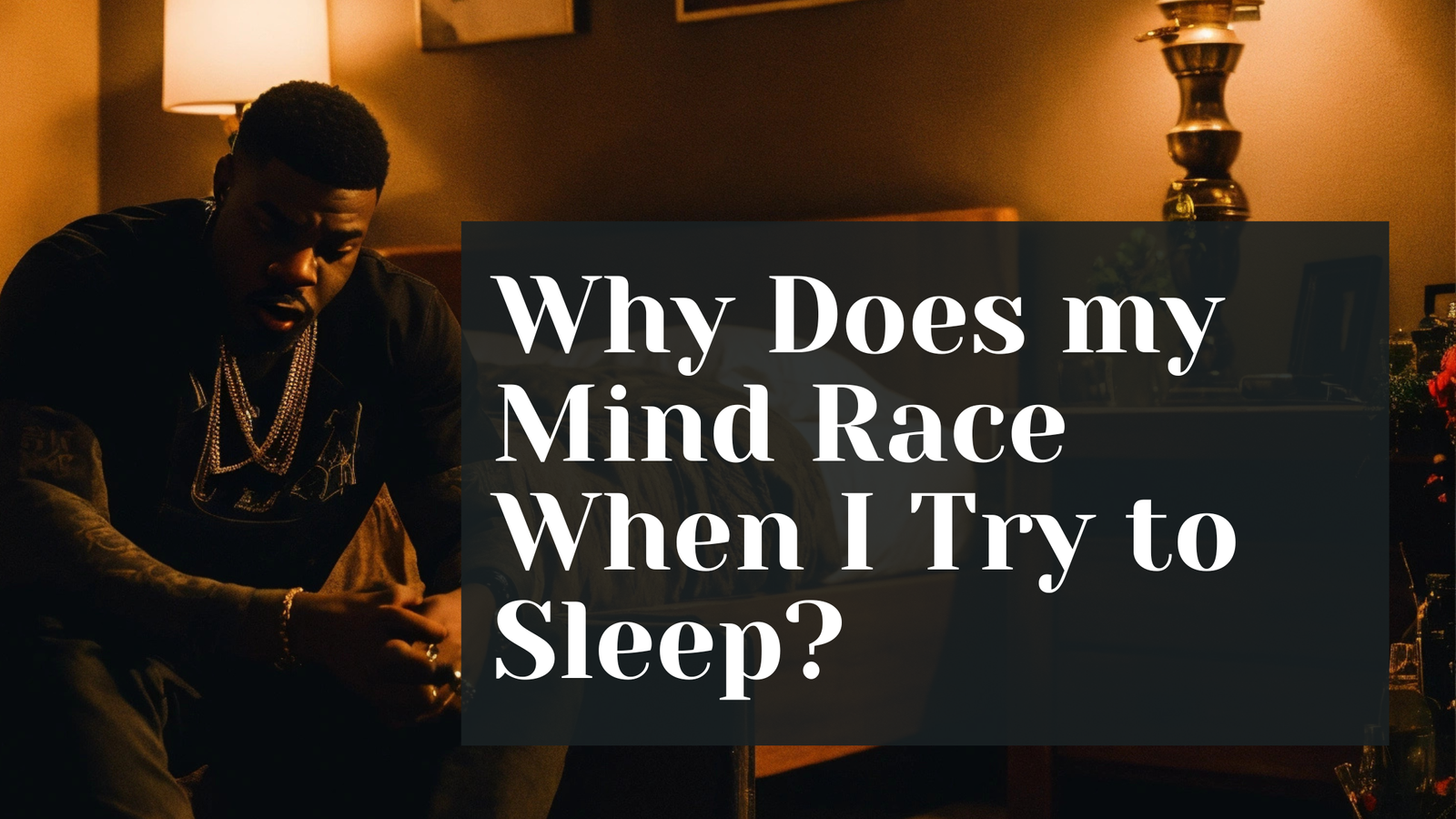
Why Does My Mind Race When I Try to Sleep?
Many people feel completely exhausted at the end of the day—yet the moment they get into bed, their thoughts suddenly speed up. To-do lists, conversations, worries, and “what if” scenarios begin looping, making sleep feel frustratingly out of reach. This experience is extremely common and usually has nothing to do with willpower. In most cases, the mind races at bedtime because of predictable changes in brain activity, nervous system alertness, and how stress is processed after dark.
Why the Mind Feels Quiet All Day—but Loud at Night
During the day, your brain is busy responding to tasks, conversations, notifications, and movement. These distractions naturally suppress unresolved thoughts.
At night, those distractions disappear. The environment becomes quiet and still, allowing delayed mental processing to surface. Thoughts that didn’t get attention earlier finally show up—often all at once. This is why many people feel calm or “fine” during the day but mentally overwhelmed when they lie down.
What Actually Changes in the Brain at Night
As evening approaches, your brain begins shifting away from outward focus and toward internal processing. Sensory input decreases, attention turns inward, and emotional regulation becomes weaker due to mental fatigue.
Hormonal changes also play a role. Cortisol levels should decrease while melatonin rises, signaling rest. But when stress lingers, the brain may remain alert even though the body is tired. This mismatch can create the feeling of a busy mind in a fatigued body.
The Nervous System and Bedtime Alert Mode
The nervous system doesn’t automatically shut off just because you’re in bed. If stress has accumulated throughout the day, your system may stay in problem-solving mode.
Lying still can increase awareness of internal sensations like breathing, heart rate, and muscle tension. For an alert nervous system, this stillness can feel uncomfortable rather than relaxing. Over time, the brain may start associating the bed with thinking instead of sleep.
Why Thoughts Feel More Urgent After Dark
At night, thoughts often feel more serious and pressing. There are fewer external cues to help the brain organize or resolve them.
Sleep pressure also adds urgency. Thoughts like “I should be sleeping” or “Tomorrow will be ruined if I don’t sleep” increase mental arousal. Clock-watching can intensify this effect, making the mind work harder at the very moment it needs to slow down.
Why Does My Mind Race When I Try to Sleep?
At bedtime, the brain finally has uninterrupted space to process unresolved information. Racing thoughts are often delayed mental activity meeting a tired nervous system—not a sign that something is wrong. Understanding this shift can make nighttime thinking feel less alarming and easier to respond to calmly.
Common Hidden Triggers People Rarely Notice
Several everyday factors can quietly contribute to racing thoughts at night:
- Mental fatigue and emotional suppression
- Irregular sleep and wake schedules
- Late caffeine or alcohol consumption
- Screen exposure and blue light in the evening
- Carrying stress through the day without release
Individually, these may seem small. Together, they can significantly increase nighttime mental activity.
Why Trying to “Force Sleep” Backfires
Sleep is not something that responds well to effort. The more you try to stop thinking or force yourself to sleep, the more alert your brain becomes.
This creates performance pressure around sleep. Frustration builds, and the bed becomes linked with struggle instead of rest. Over time, this reinforces racing thoughts and wakefulness.
Natural Ways to Quiet a Racing Mind (Non-Medical)
Many people find relief by focusing on reducing stimulation rather than eliminating thoughts. Moving worries out of the bedroom earlier in the evening—such as writing a simple list—can prevent mental looping at night.
Slow breathing can help signal safety to the nervous system. Predictable wind-down routines, dim lighting, and gentle activities tell the brain it’s safe to power down. The goal isn’t to control thoughts, but to give the mind something quieter to rest on.
When Racing Thoughts May Need Extra Support
If racing thoughts happen most nights, interfere with daily functioning, or create anxiety around sleep itself, it may help to speak with a qualified professional. Support can provide guidance tailored to your situation without relying on guesswork.
Short Ending Paragraph
Racing thoughts at bedtime often reflect how the brain processes stress once the day slows down. Recognizing this pattern can make nights feel less intimidating and easier to navigate.
Why Does My Mind Race When I Try to Sleep?
For many people, asking this question shifts the focus from fighting the mind to understanding how it naturally works at night.
Medical Disclaimer
Medical Disclaimer:
This article is created for general informational purposes based on research and common clinical insights. It does not provide medical advice. I am not a doctor or licensed physician. For persistent sleep issues, medication guidance, or severe symptoms, please consult a qualified healthcare professional.
Sources
- Cleveland Clinic – Racing Thoughts and Sleep:
https://health.clevelandclinic.org/how-to-stop-your-mind-from-racing-and-get-to-sleep - National Institute of Mental Health (NIMH) – Anxiety & Sleep:
https://www.nimh.nih.gov/health/topics/anxiety-disorders
